
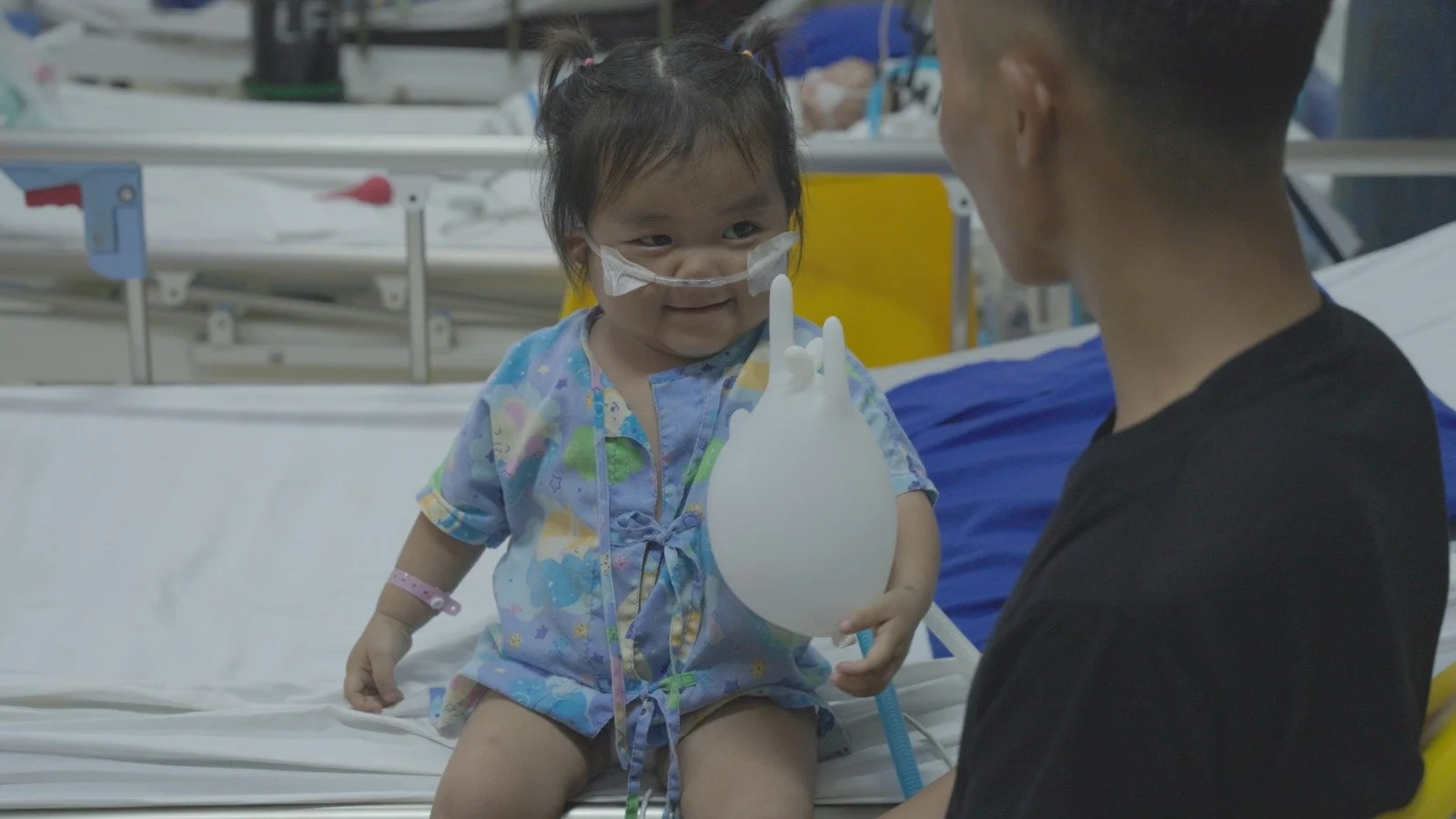
Two-year-old Mai Xiong’s health troubles began when doctors suspected she had caught the measles virus. Since then, every chest infection has turned into severe pneumonia. Through 2025, she was admitted to Lao Friends Hospital for Children several times with other respiratory complications such as bronchiectasis and severe asthma-like attacks.
In June 2026, Mai arrived in LFHC struggling to breathe. Her belly was swollen, the skin around her ribs pulled in with every breath, and her lungs were crackling on both sides. Her underlying conditions made things harder: severe pneumonia, bronchiectasis (airways that have been damaged and widened, so they trap mucus and infection easily), and a severe asthma-type attack that would not settle.
That night, the team started CPAP, a gentle machine that pushes air into the lungs to keep them open. But Mai’s oxygen levels dropped dangerously low and her lips turned blue. Our nurses and doctors gave medication to calm her breathing, and her oxygen improved. Then, just after 10 pm, it fell again. The team stepped in immediately, breathing for her by hand with a bag and mask, and moved her to our Intensive Care Unit.
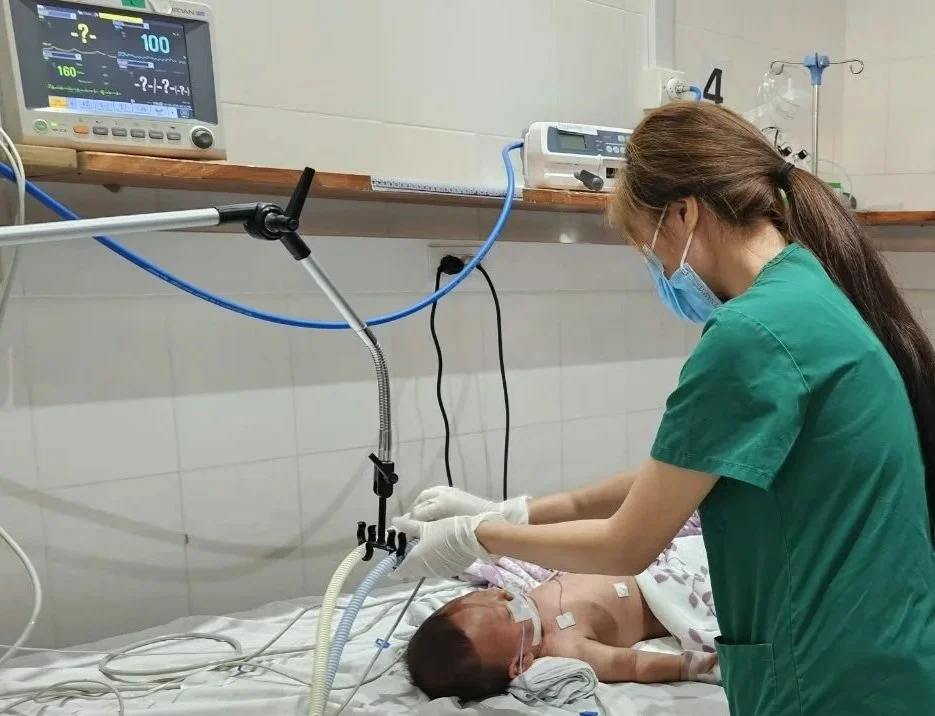
Multiple Intensive Care Unit Admissions
Mai’s recovery was not a straight line. Over her two months with us (several admissions in 2 months) , she went into intensive care four times, and each time she grew strong enough to return to the children’s ward before needing that extra level of care again.
In total, Mai spent about 21.5 days in an ICU bed. Her longest stay lasted nearly 11 days. .
Each time, the ICU meant a nurse at her bedside around the clock, continuous monitoring of her heart and oxygen levels, and doctors ready to act the moment anything changed. For a child this small, oxygen can drop within minutes, and that close watch made all the difference
Slow and Steady Recovery
Every day, the team tried to gradually reduce Mai’s oxygen support, but her oxygen levels showed that she was not quite ready. They continued to adjust her treatment, correct her low potassium levels and closely monitor her progress. Dr. Annkham and the medical team worked together to develop a long-term care plan.
Slowly but surely, Mai grew stronger. She was transferred out of intensive care and needed only a small tube beneath her nose to receive supplemental oxygen. As her condition improved, the team gradually reduced the amount of oxygen she received until she was ready for a trial without it. To the delight of the medical team, Mai maintained healthy oxygen levels on her own. She no longer needed supplemental oxygen.
On 2 September, Mai went home, fully recovered and breathing independently.