Giving Every Child a Voice
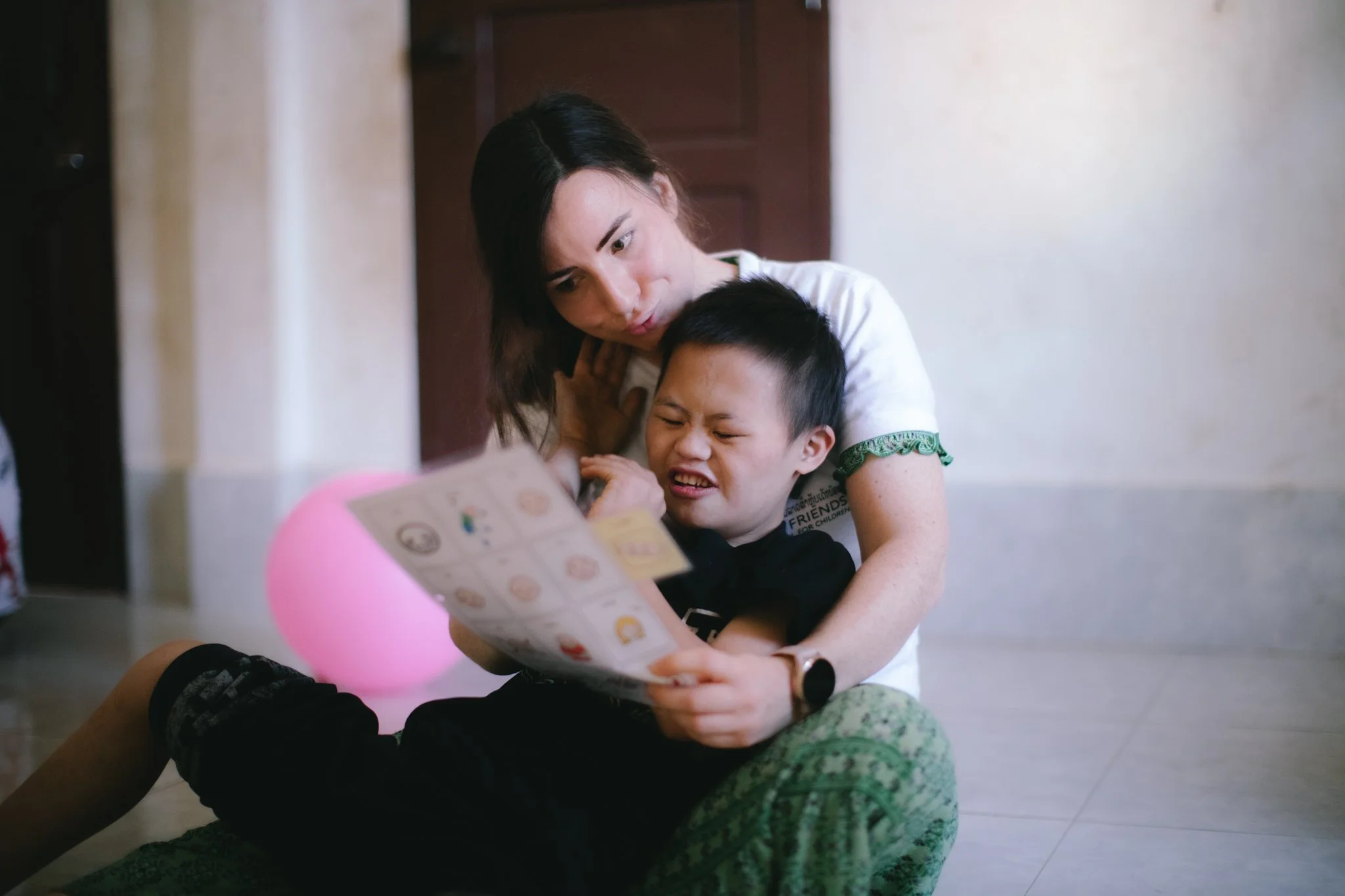
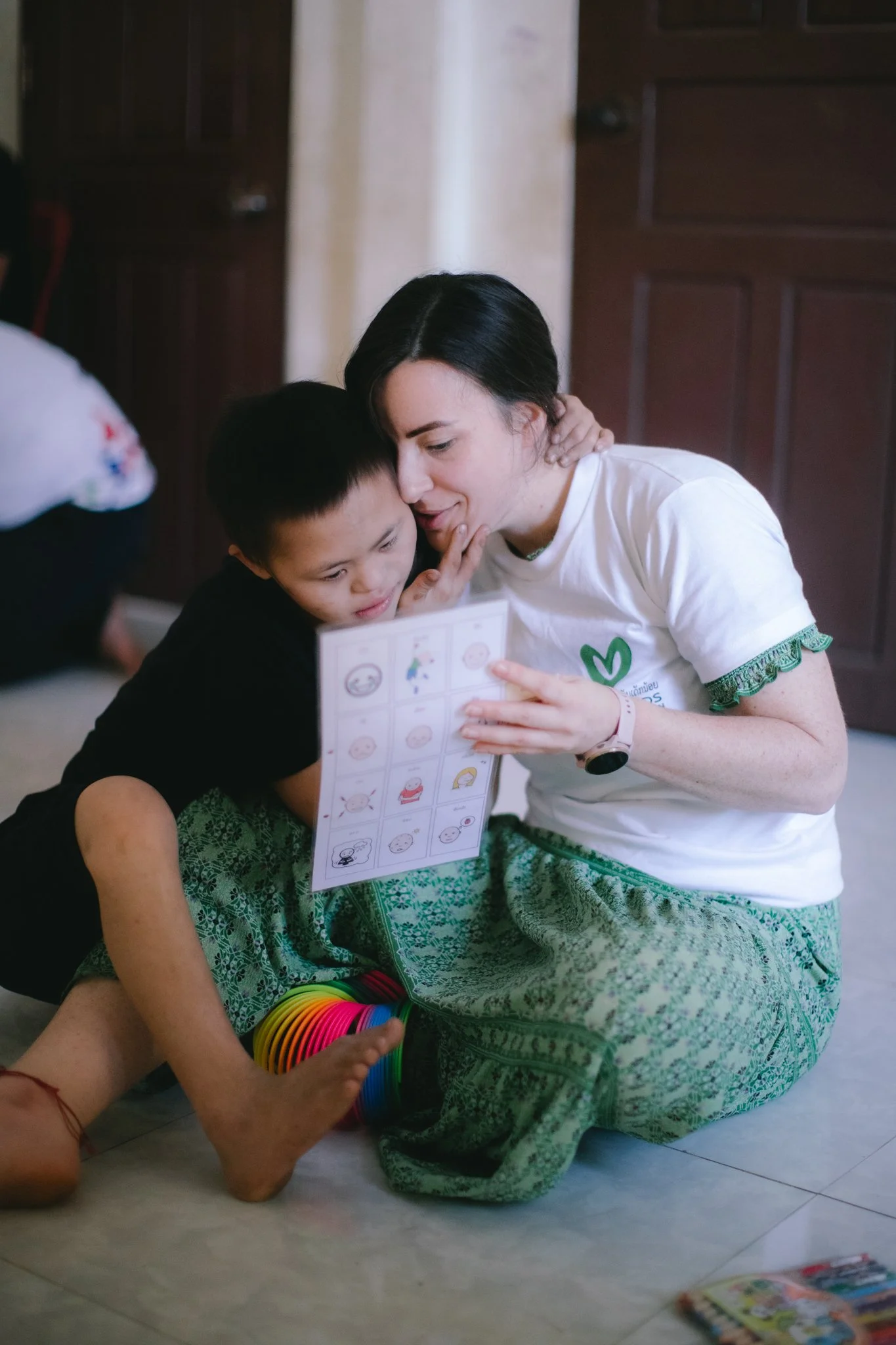
For children who cannot speak, even a simple picture board or a small device can open the door to new connections, choices, and a sense of belonging. At Lao Friends Hospital for Children (LFHC), a specialist volunteer is helping make that possible.
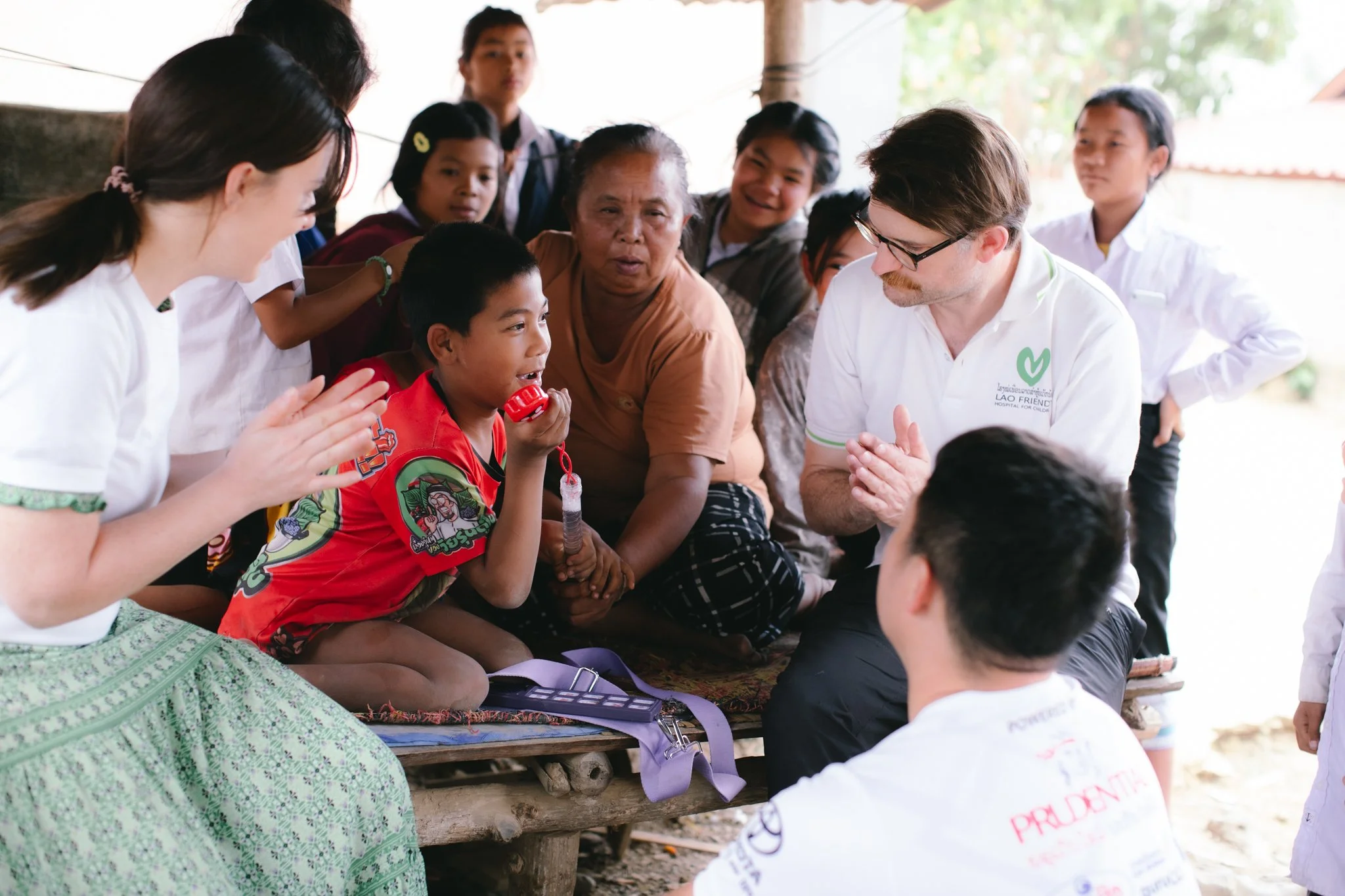
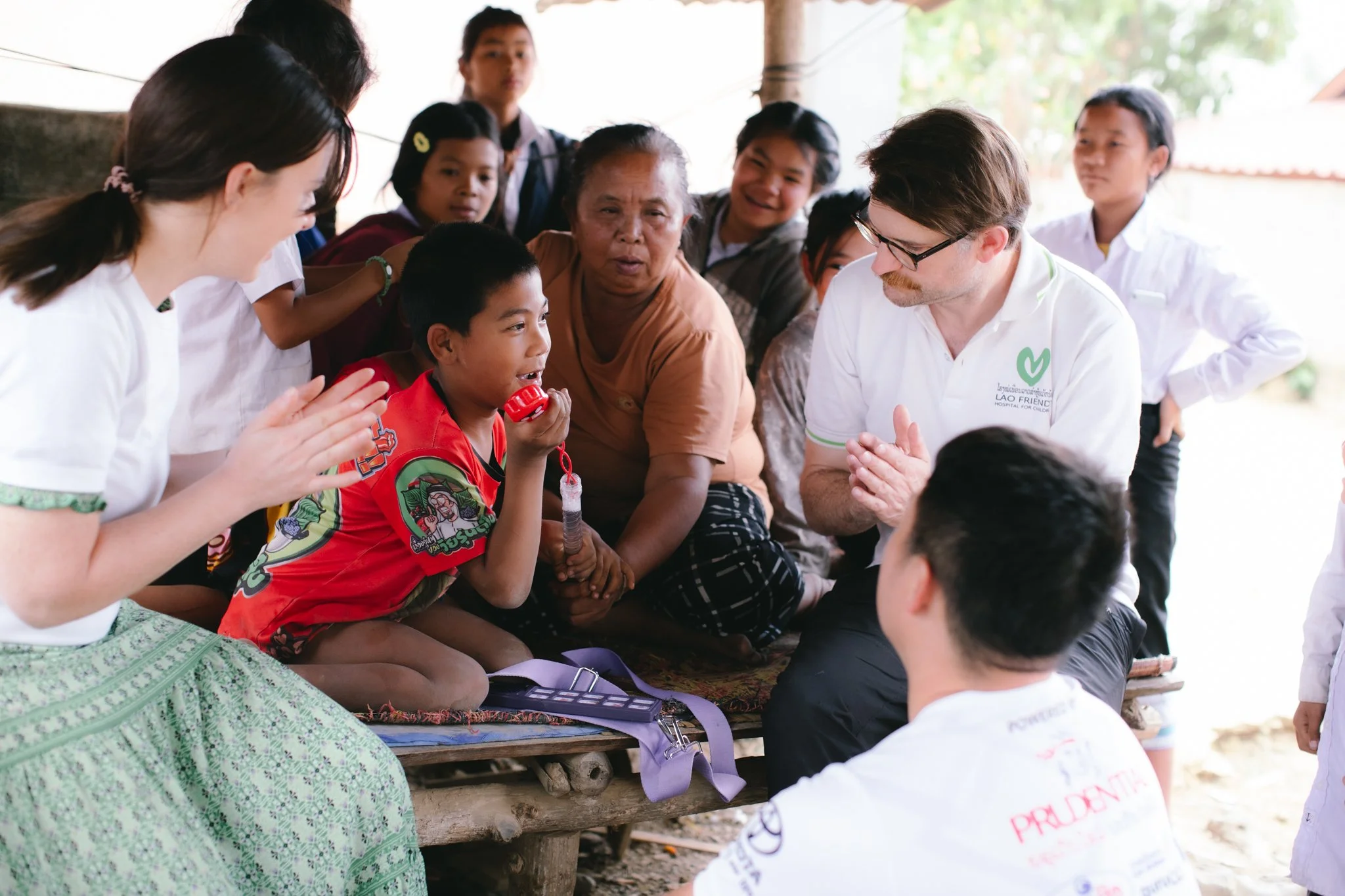
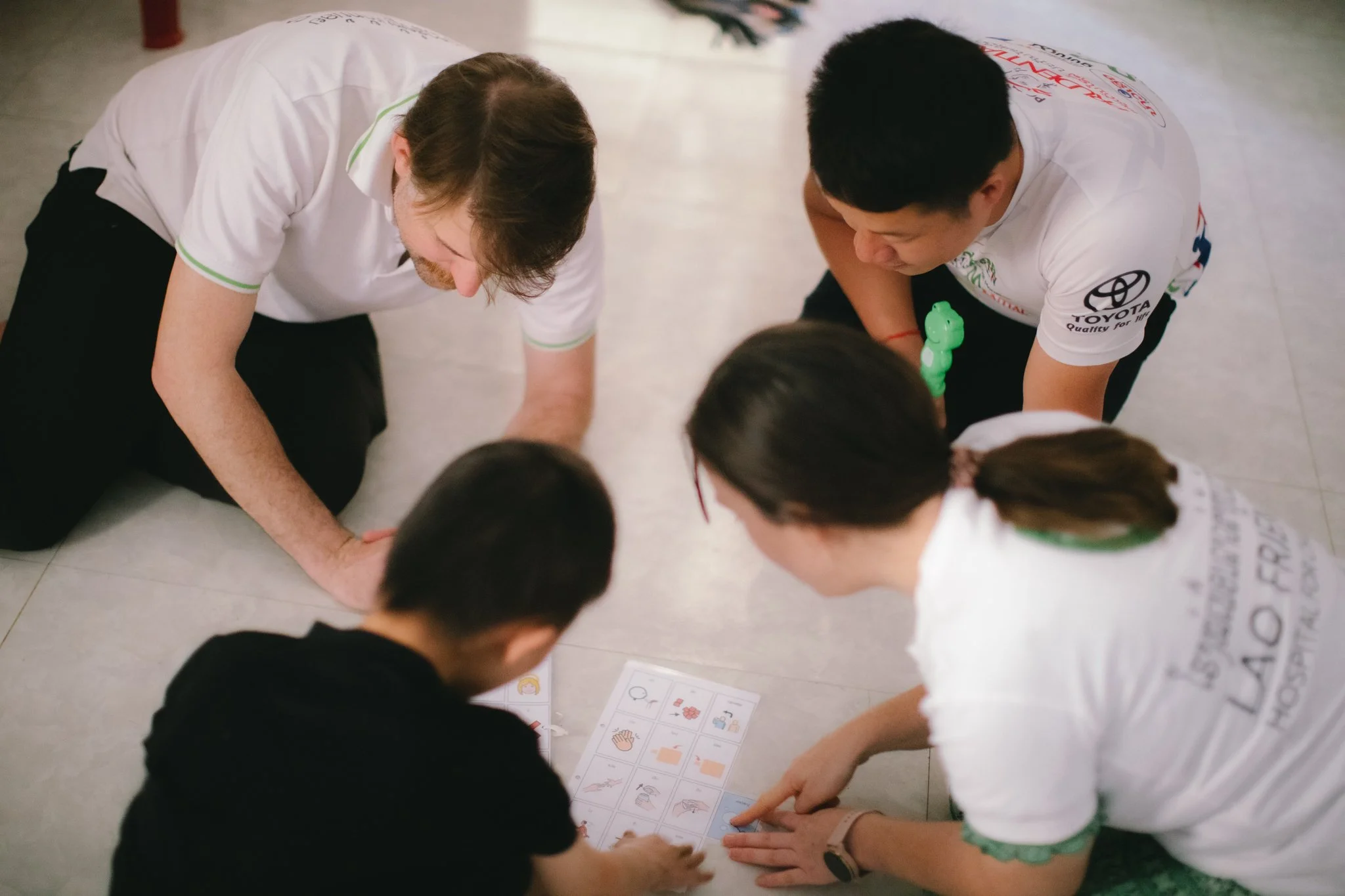
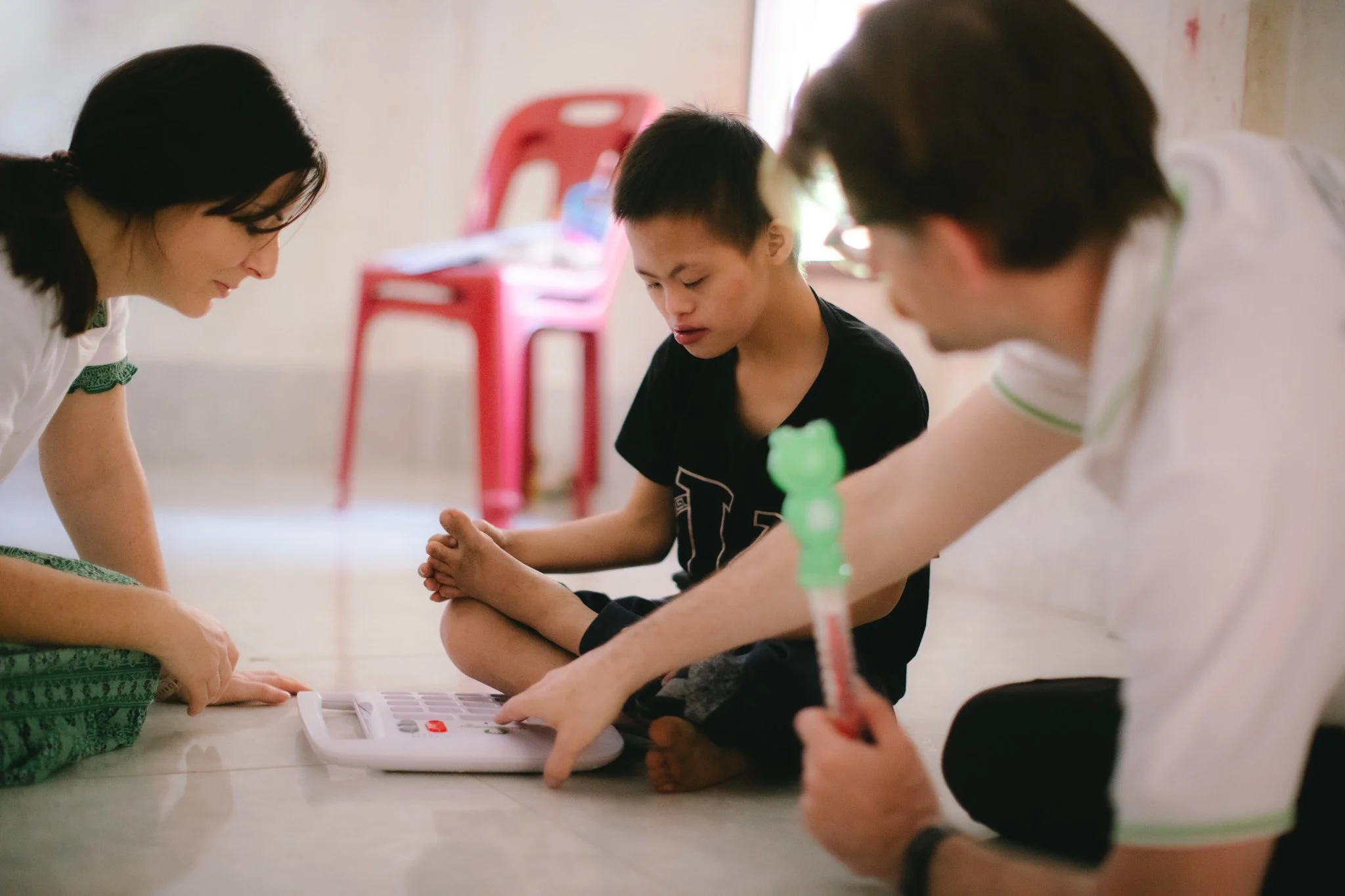
Volunteer Charlie and Ruth with patient using a ‘Buddy Talker’ device (Photo by Alida Urban)
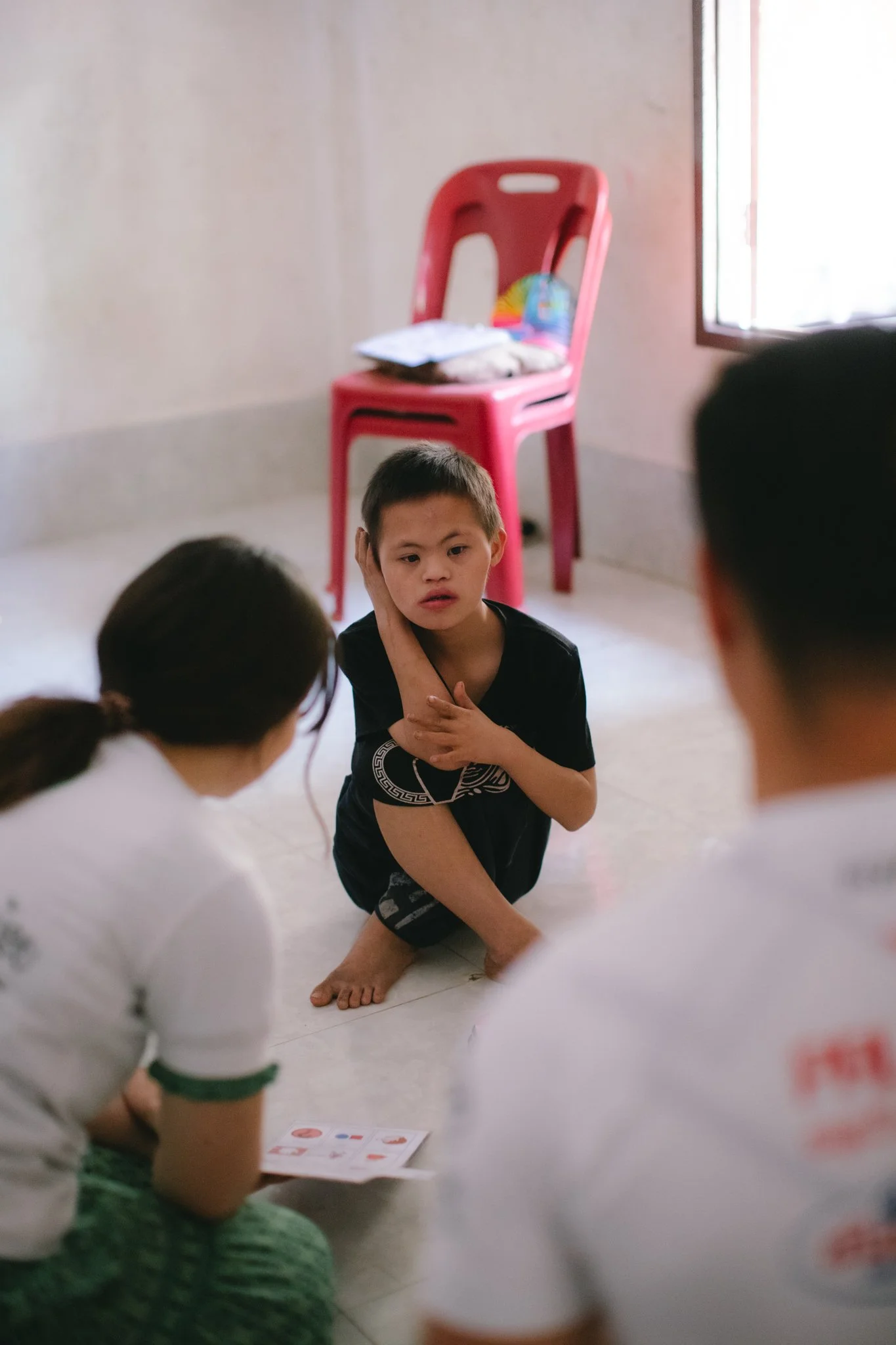
When we communicate daily, it happens so naturally that sometimes we take it for granted. Something as simple as asking for food, saying they are tired, choosing a game, or calling a friend to come and play are daily moments that shape a child’s world. But for children who cannot speak, these simple moments can become incredibly difficult, affecting their quality of life.
This is where AAC can change a life.
AAC stands for Augmentative and Alternative Communication. It’s using tools, pictures, signs, technology, or boards to help someone express what they want, need, think, or feel. This might be a simple picture book or more advanced tools like a device that speaks when they press a button. For children with very limited movement, it may even be a system that lets them communicate using their eyes alone.
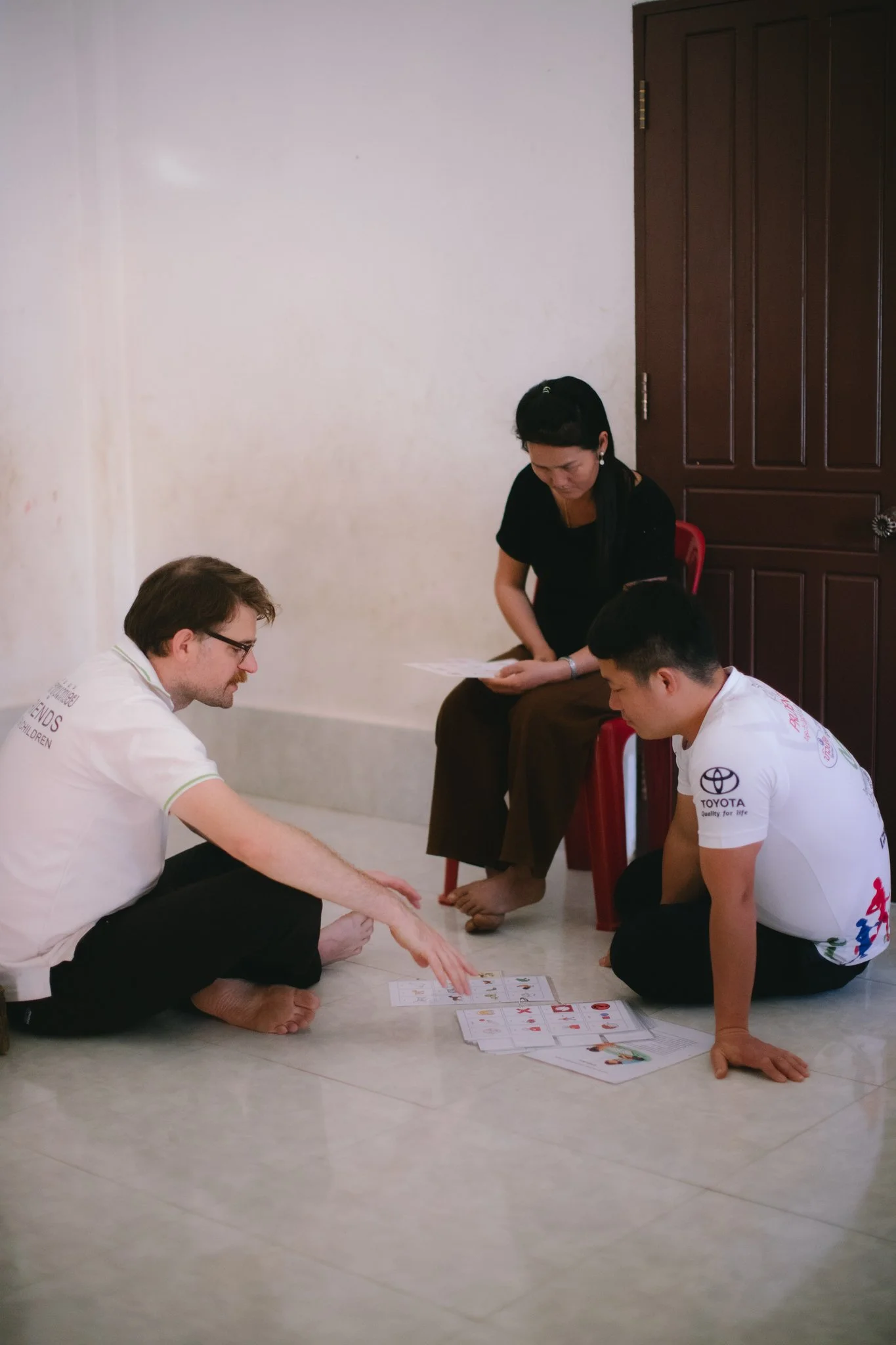
At Lao Friends Hospital for Children, this work has been introduced and strengthened by the long-term support of Charlie Danger, an occupational therapist, advanced AAC practitioner, and Director of *Global Symbols. Charlie has been volunteering at LFHC for several years. He works closely with the LFHC Development Clinic team to create communication tools that fit each child’s needs and are tailored to their language, community, and way of life.
The types of AAC used in LFHC
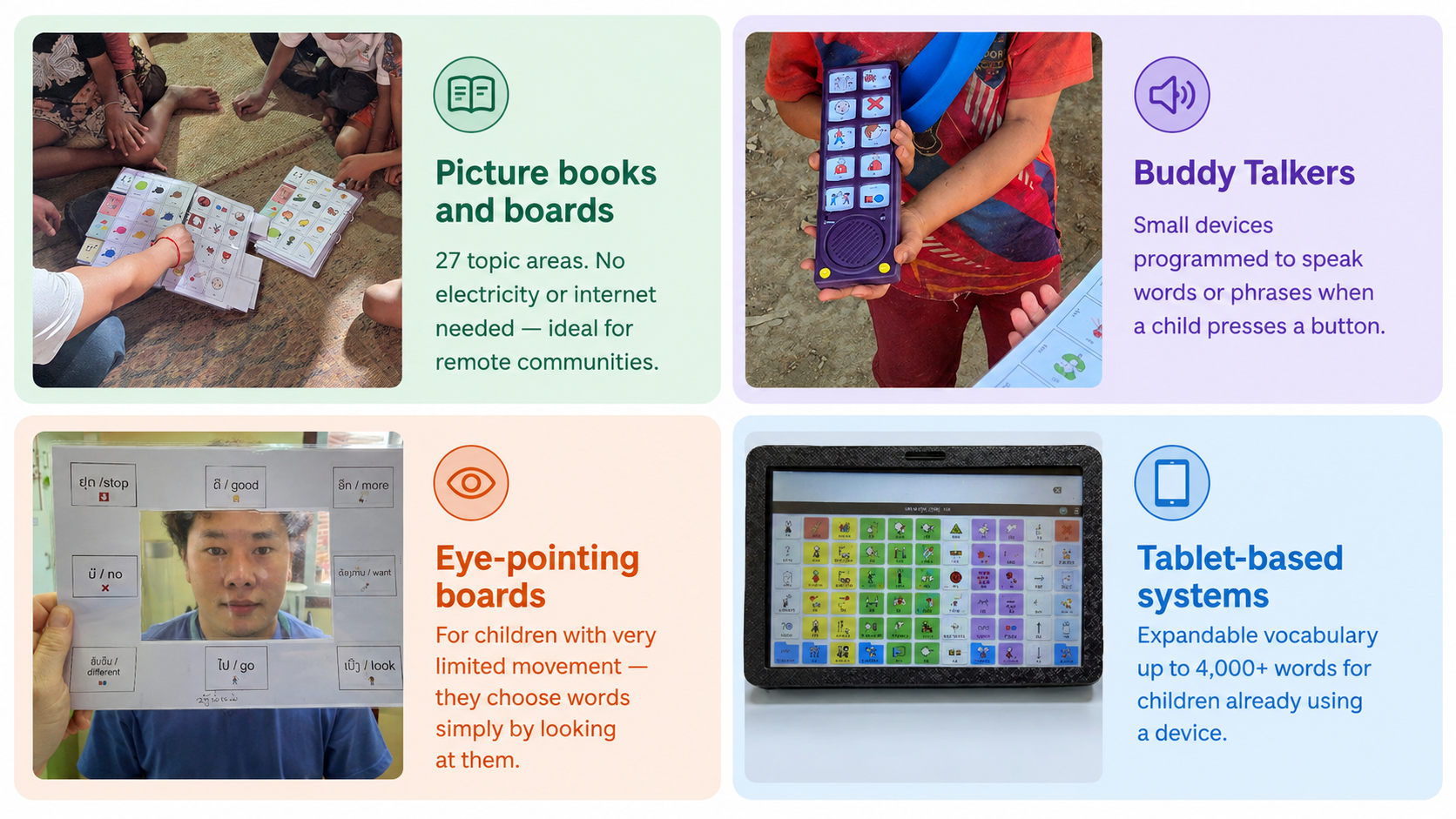
Every child is different. The approach always starts with what is practical, affordable, and achievable in the child's actual environment.
A gap in care that families used to face alone
In Laos, support for children with communication difficulties is still very limited. Most families navigate this journey without any professional guidance, doing the very best they can with love, patience, and instinct alone.
Without access to the right tools or knowledge, even the most devoted parents can struggle to know how to play with and connect with their child. This is not a failure of the family but rather a gap in the system. AAC tools give children a way to make choices, help parents better understand their child, and allow siblings, friends, and neighbors to include them.
Update from Charlie’s most recent visit (January to February 2026)
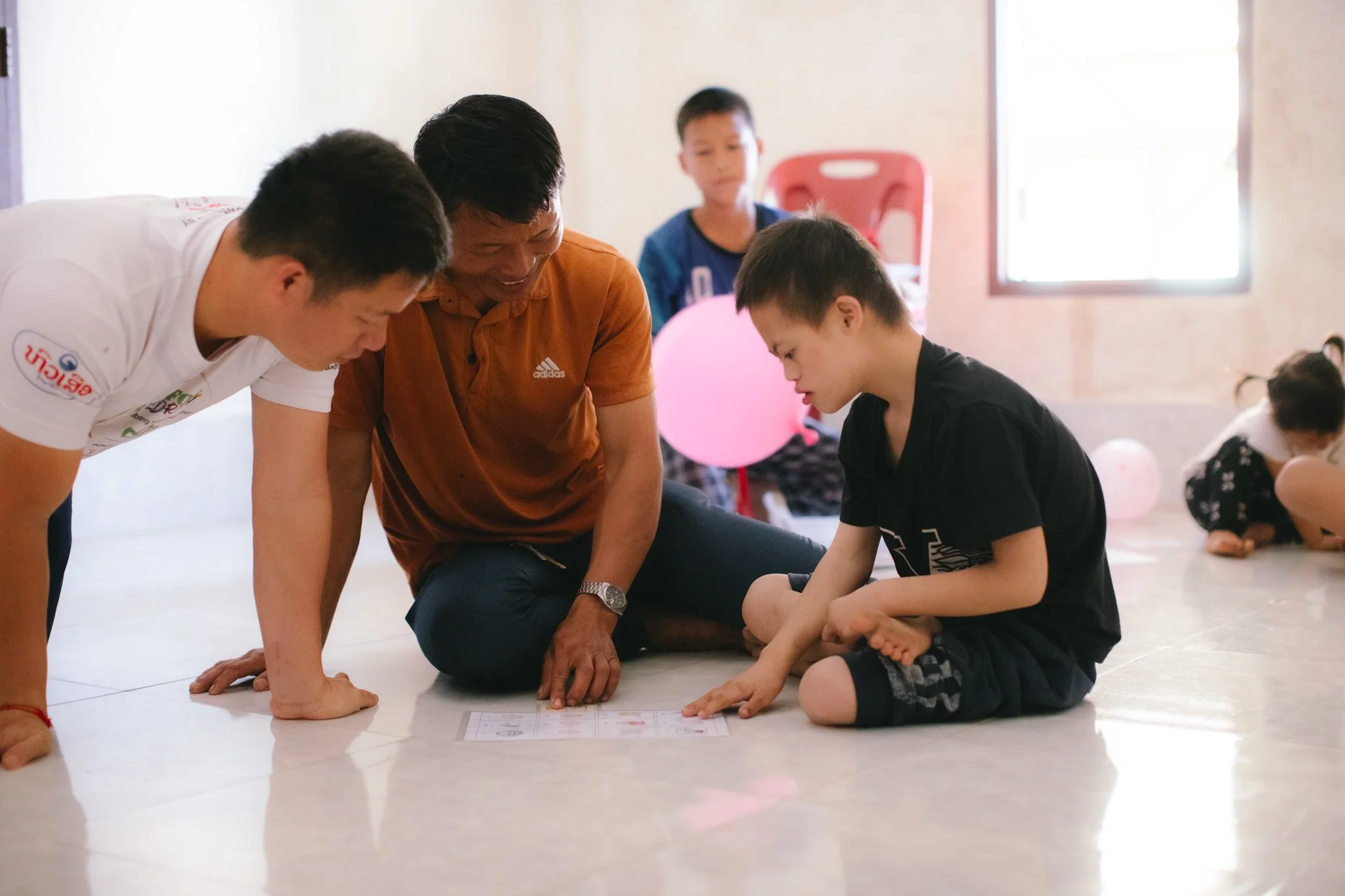
Over six weeks, Charlie returned to LFHC alongside two UK colleagues: Ruth Williams, a Speech and Language Therapist, and Helio Lourenzo, a Rehabilitation Engineer. Together with LFHC's Child Life and Speech & Language Therapist, Kongmeng, they assessed children, trained families, and built tools that can continue to be used after the visit.
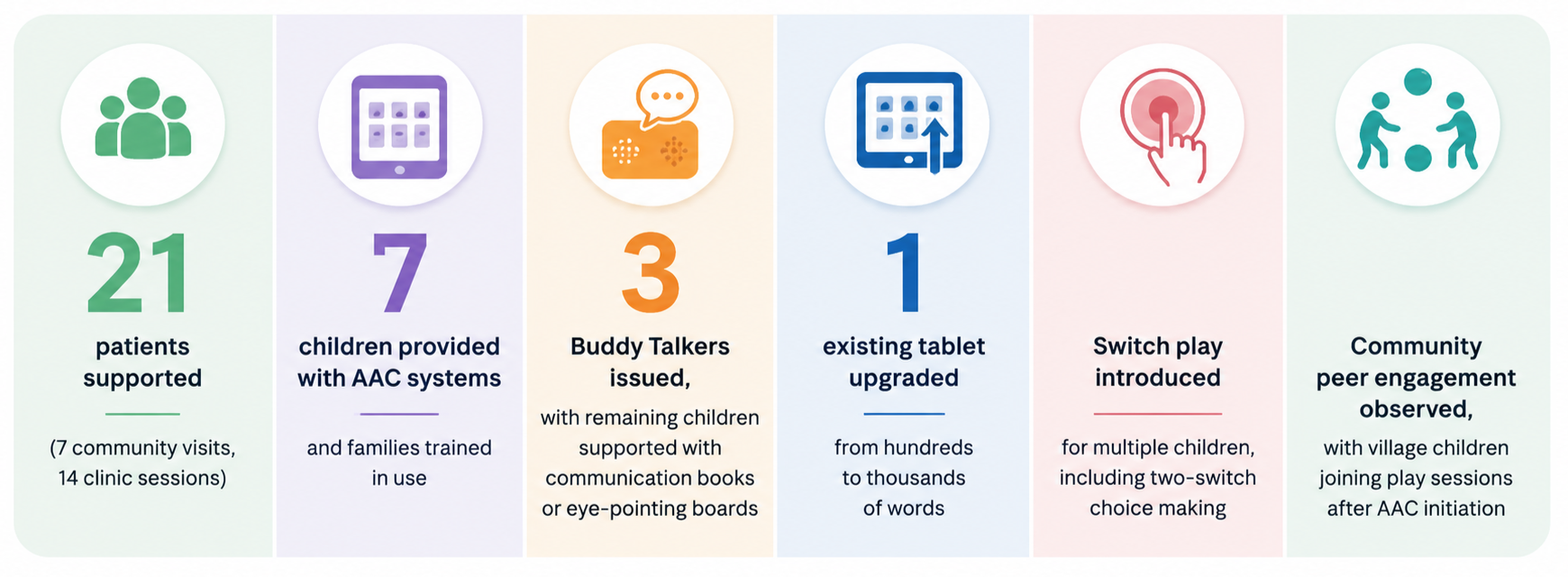
Key outcomes summary from the most recent visit
From the clinic to the community
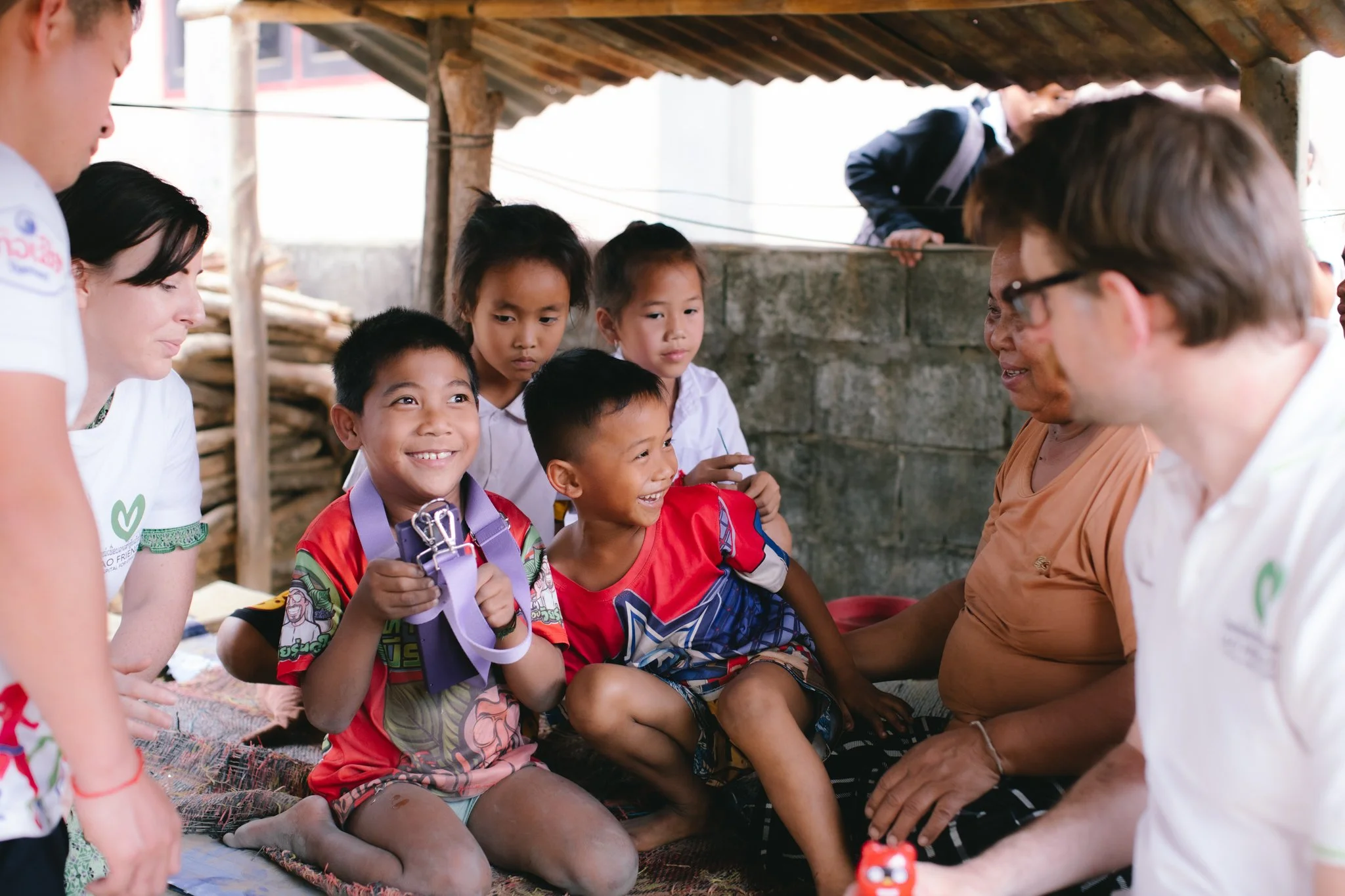
Home visits are especially important because they reveal each child's real daily life, how far families live from services, what resources they have at home, and how other children in the village interact with them.
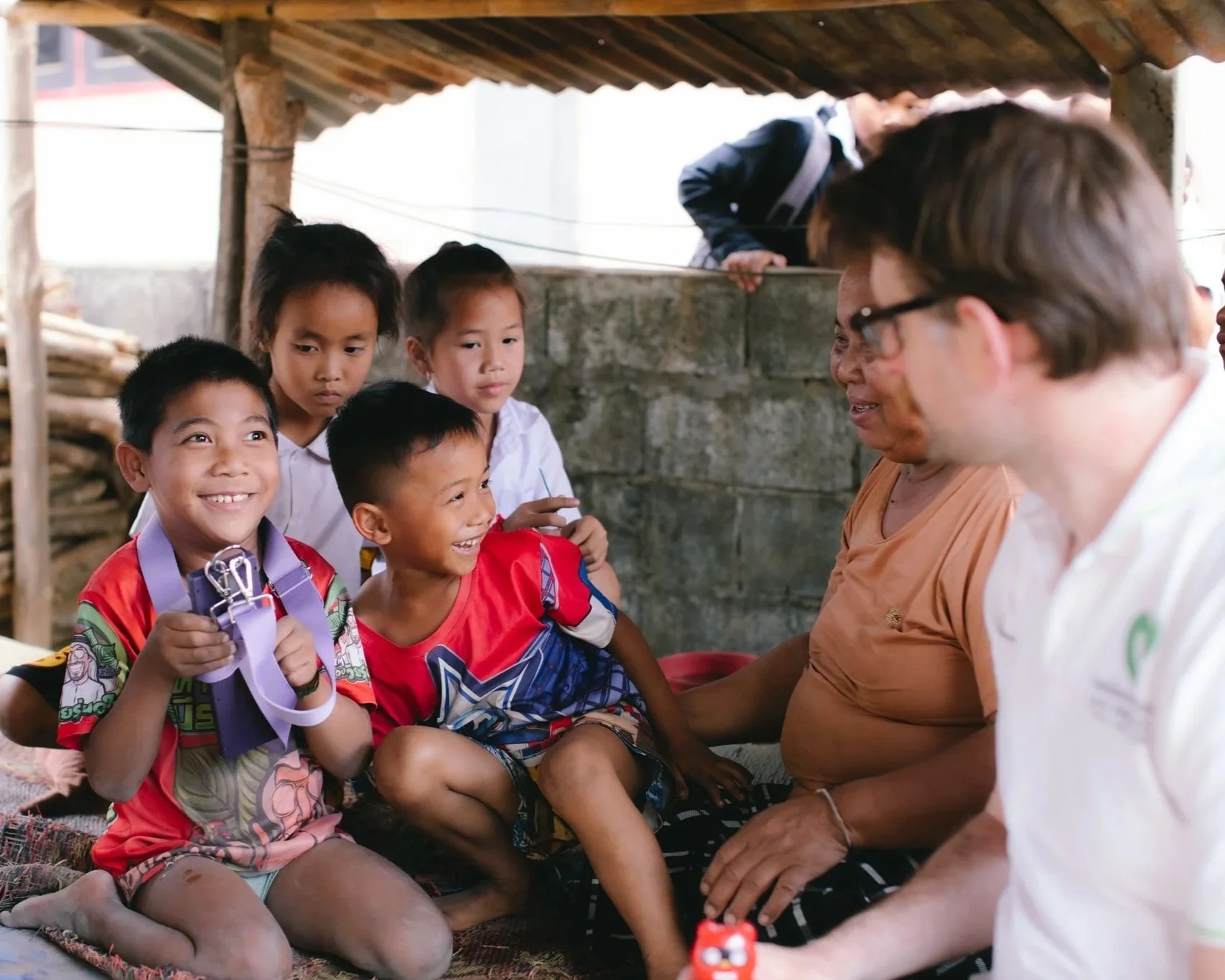
9-year-old Khamhack using a ‘Buddy Talker’ to say "Come play with me!" Photo: Alida Urban
It was a simple moment, but a powerful one. AAC tool helped him invite others into his world and express how he feels.
These visits also reinforced that AAC can be successfully introduced in rural Lao communities using low-cost, locally reproducible tools. The challenge is not access to technology alone. It is building the human connections around it.
The power of play
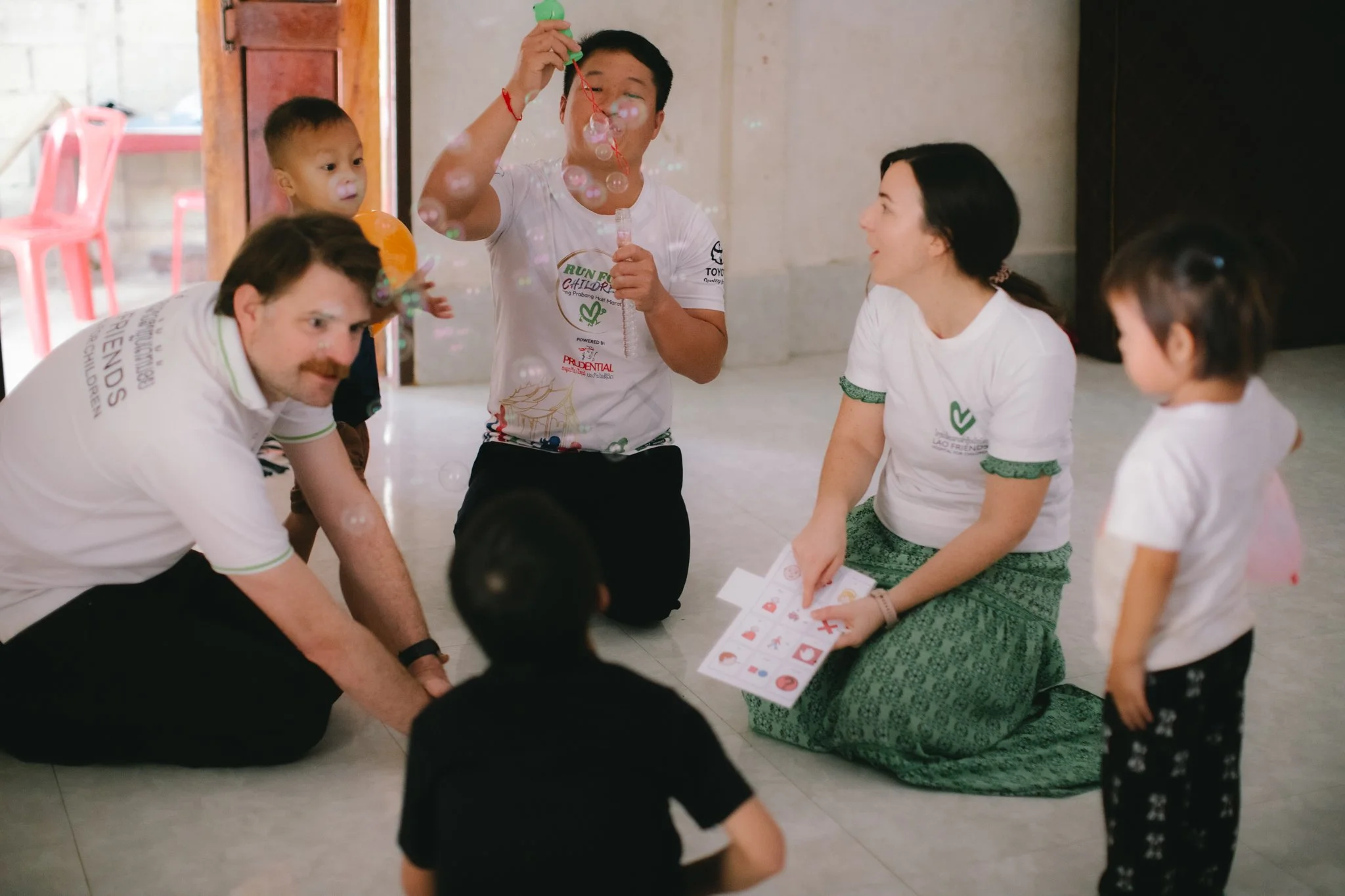
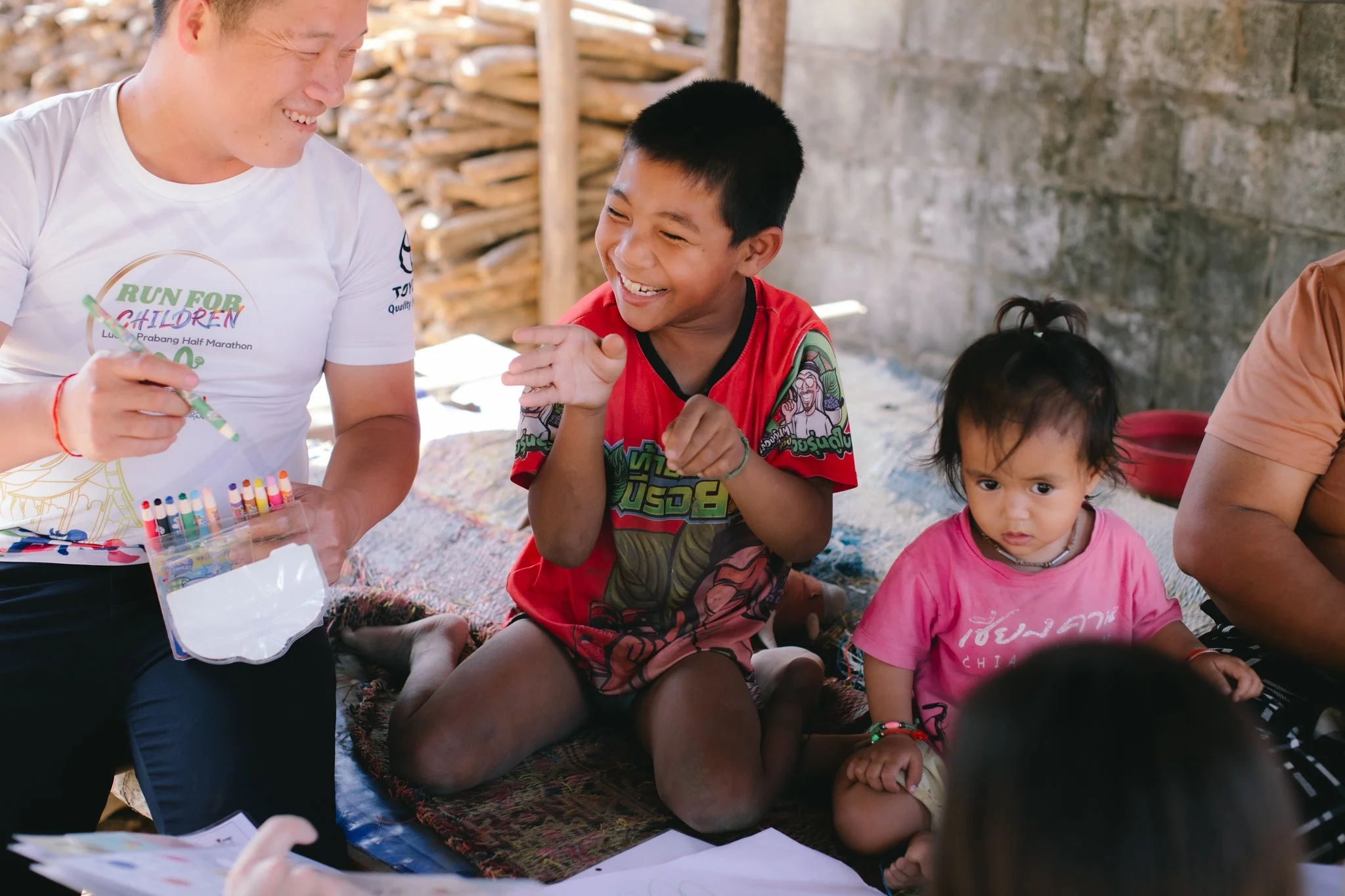
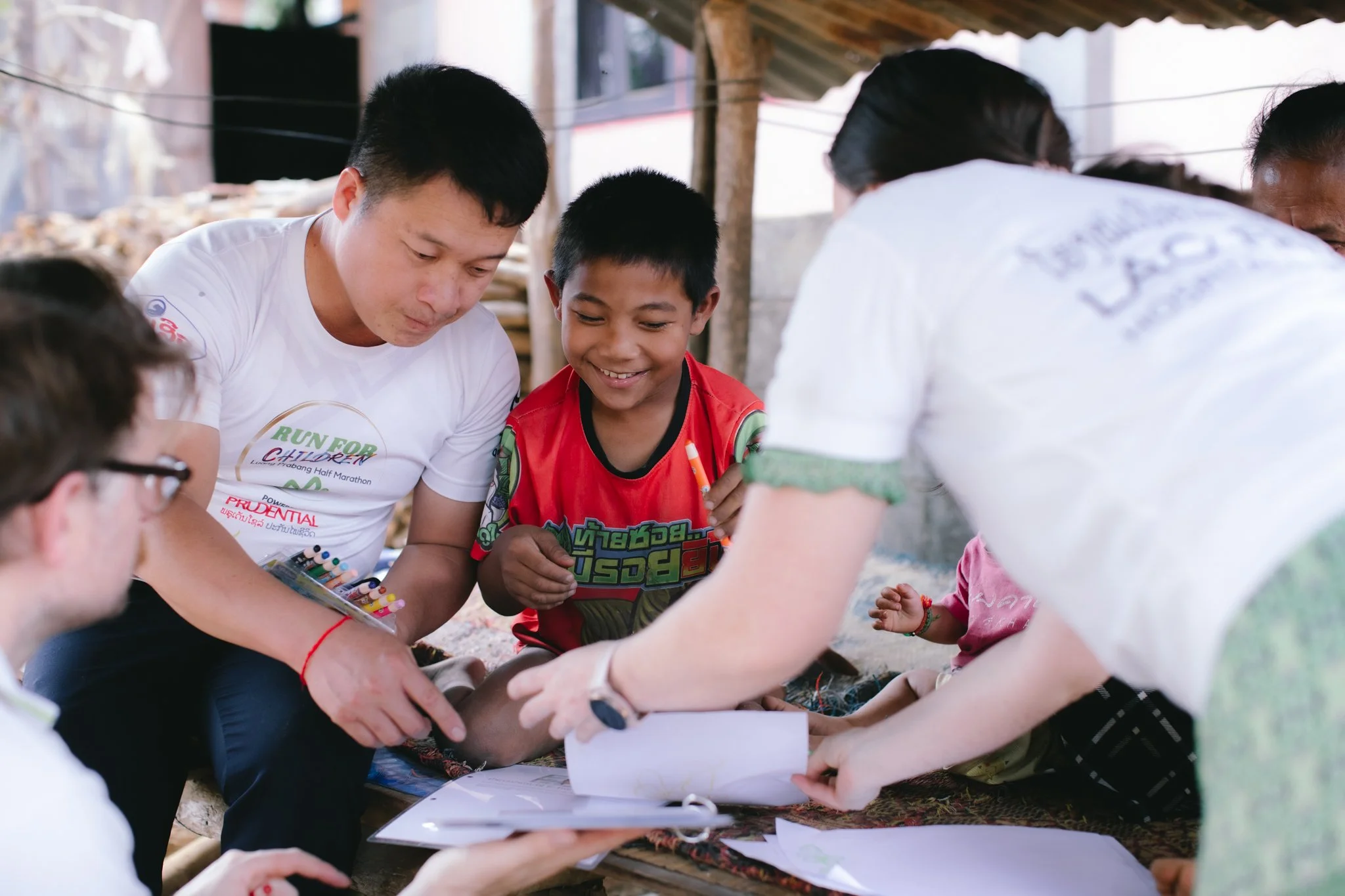
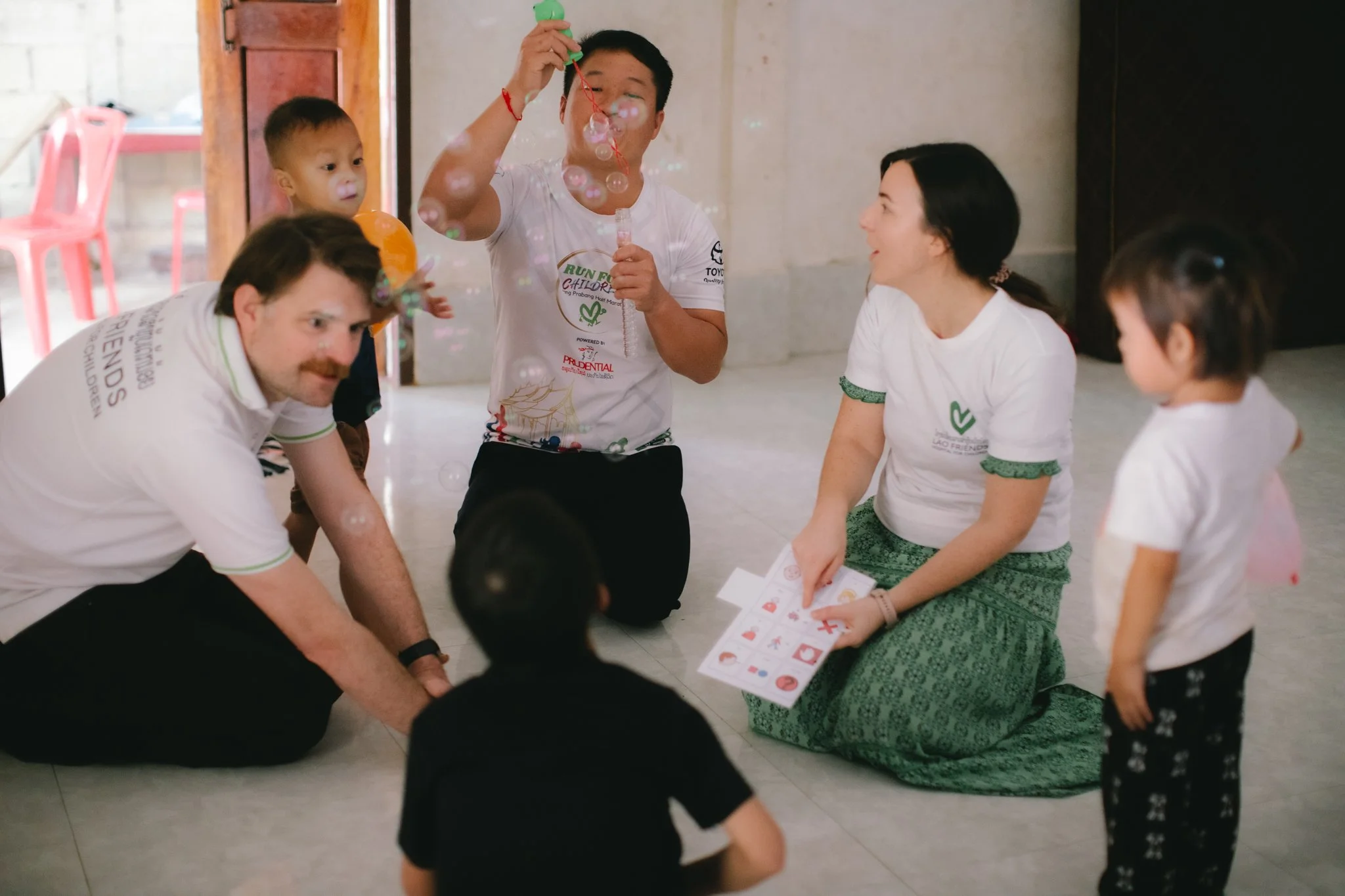
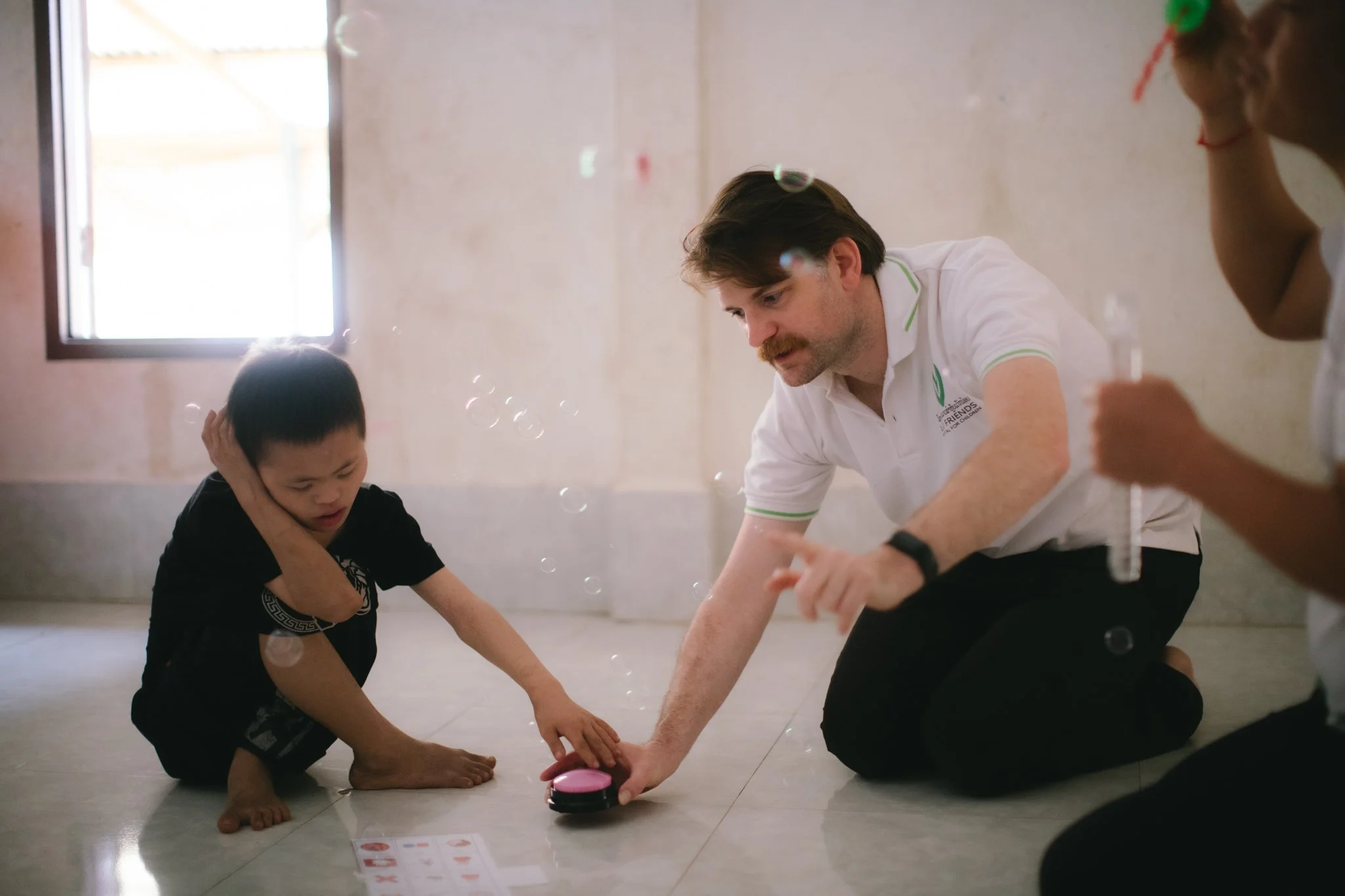
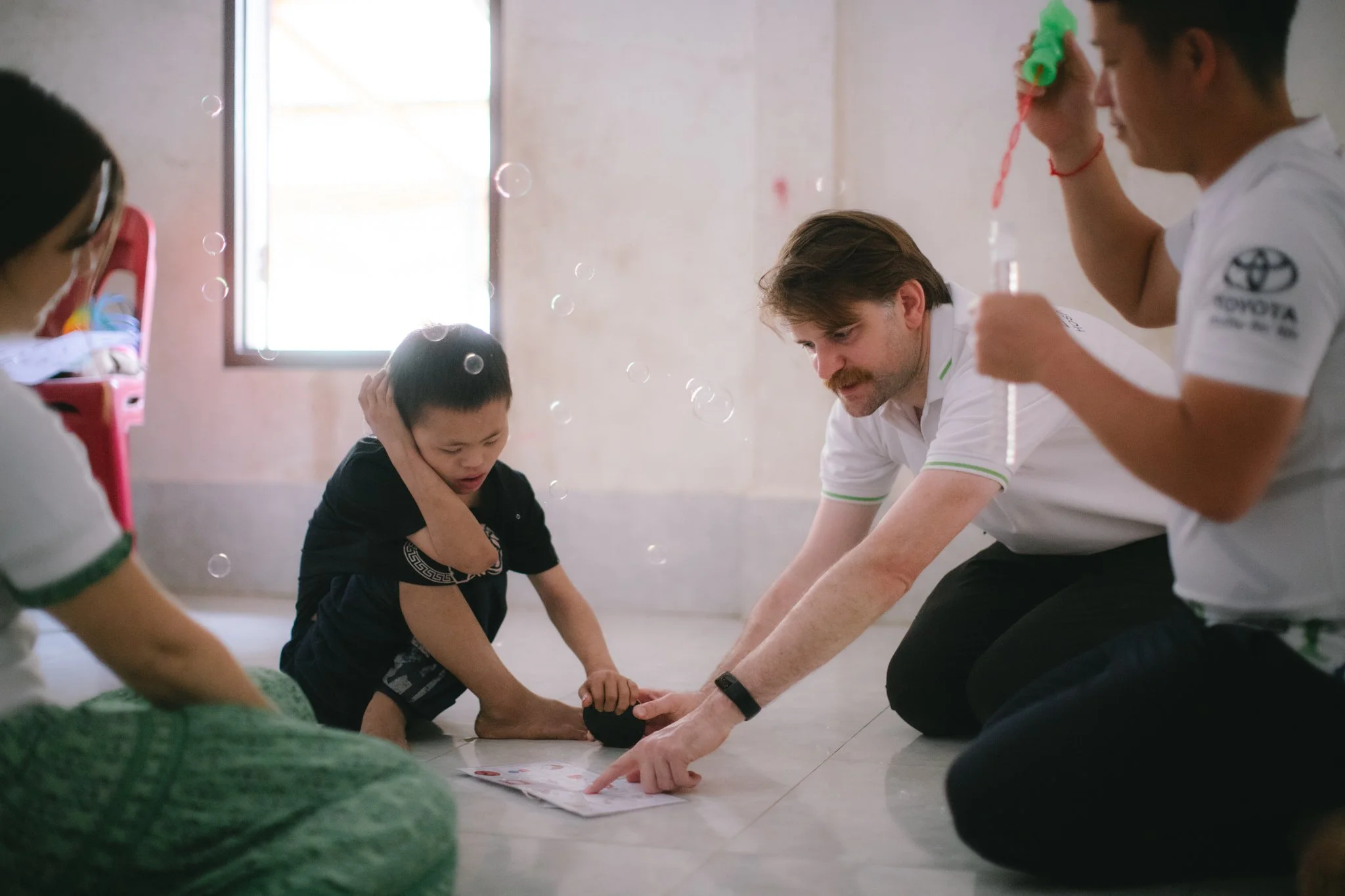
Play was central to every session. The team used bubbles, balloon football, drawing, and dancing toys to understand how each child communicates and what motivates them. Whether it was a game of balloon football, blowing bubbles, dancing, drawing, or dissolving into giggles over animal impressions, the team used play as both a motivator and an assessment tool, in the clinic and out in the community.
The Child Development Clinic also has one specialist gaming device, a Grid Pad donated by Smartbox and brought to Laos by Charlie in 2023. Accessible by both switch and eye-gaze, two children used it this visit to play video games. The team also upgraded the Nintendo Switch console to be switch accessible, opening up games like Mario Kart to children who need alternative controls.
Building something that lasts - What are the next steps?
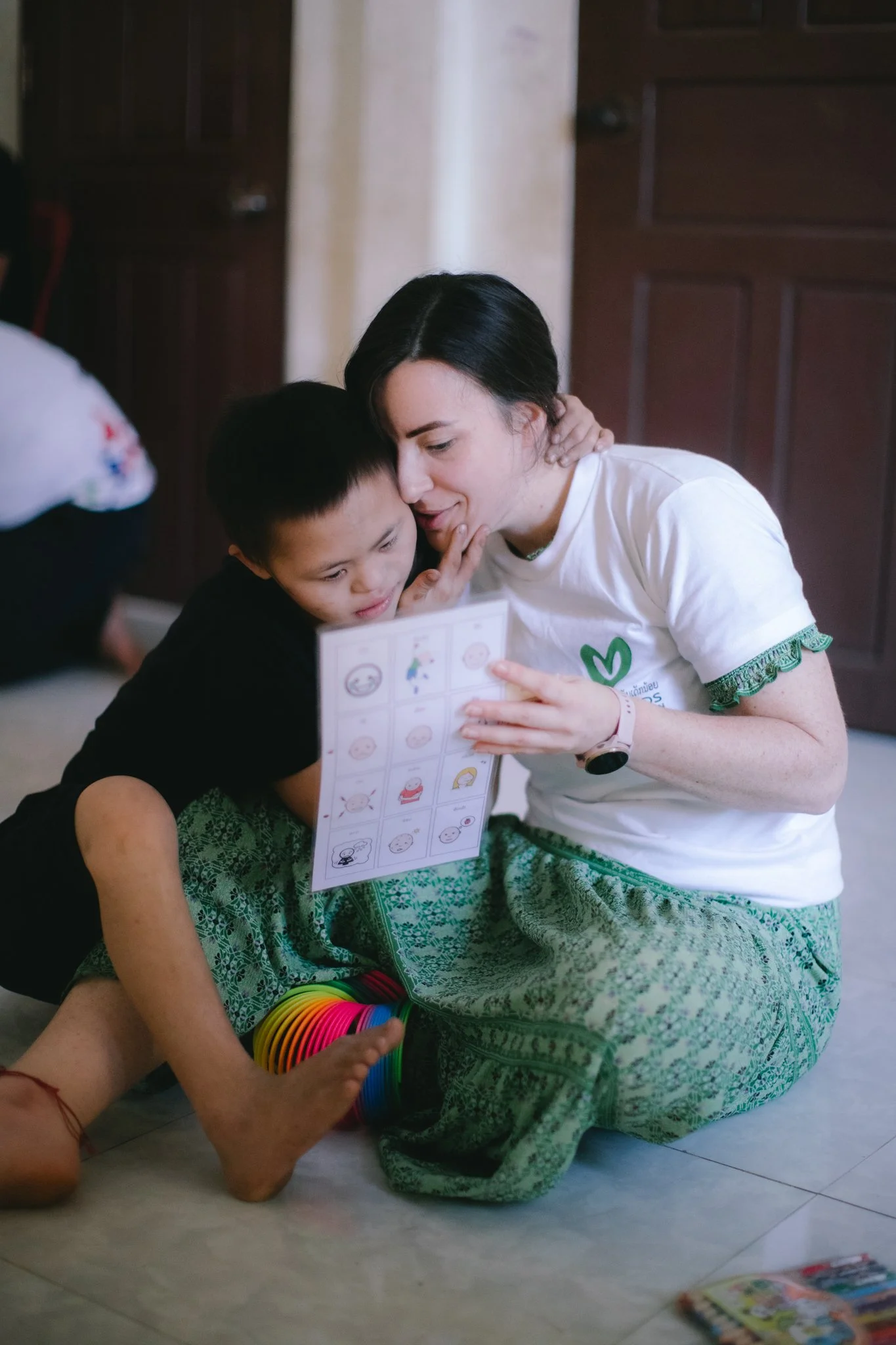
A device can help a child speak, but people must be ready to listen. Children need parents, siblings, friends, and health workers to become communication partners: people who give them time to respond, encourage them to make choices, and include them in daily activities.
Charlie and Kongmeng are already planning the next steps, including regular home follow-ups, community play groups, and identifying a parent advocate who can help other families learn how to use AAC tools.
Ruth and Kongmeng also redesigned an eye-pointing frame so the LFHC team can reproduce it locally, supporting more children in the future without needing specialist visitors.
This is how long-term change happens: not through equipment alone, but through knowledge, confidence, and community.
“Continued follow-up and community-based support will be essential to sustain and expand this work. Technology alone is not sufficient. The most important factor in success is the community around the child.”
Every child deserves to be understood.
Every child deserves connection.
With the right support, every child can have a way to communicate.
See Charlie and team in action
Photography credits: Alida Urban