“This Is Still a Family”- Reflections From a Return Volunteer
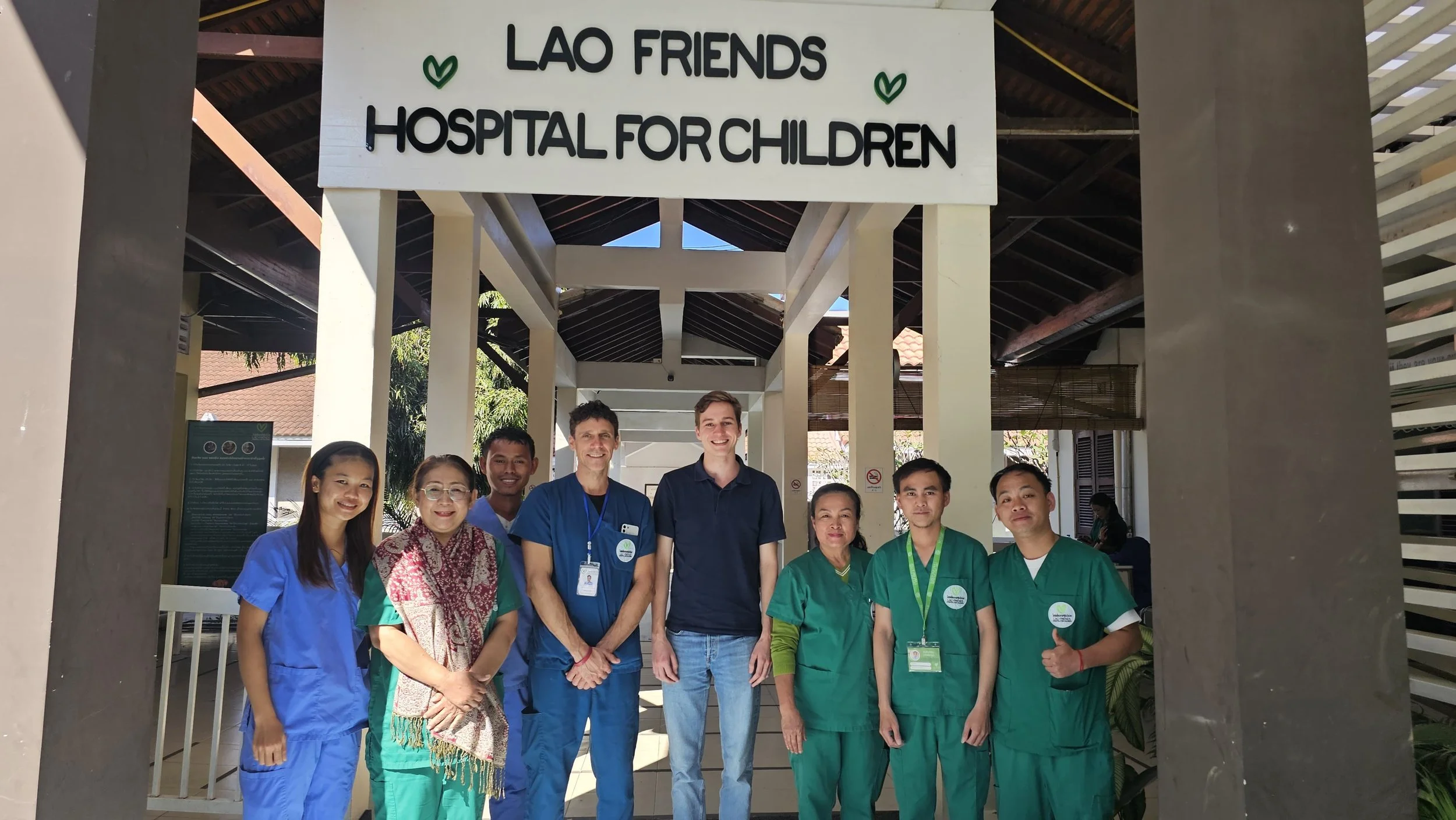
Dr. Mark (Emergency Medicine Specialist) shares his reflections with us from his recent volunteer experience at Lao Friends Hospital for Children. Having first joined us in 2016 and returning again nine years later, he offers a unique perspective on the growth, progress, and important changes he has witnessed at our hospital over time. Here’s his account:
“Leaving here can pull at the heartstrings. I am an emergency medicine doctor from Canada, who works in both adult and pediatric emergency care. Global health has been a passion of mine since medical school, and I have had the great fortune over my career of volunteering in over 10 low-resource countries. And so I can say from experience that there is something quite special about the Lao Friends Hospital for Children in Luang Prabang.
I first volunteered here in 2016, shortly after the hospital opened. It’s mission was powerful, as it is now — provide free care to the children of Laos. Many families would not be able to afford treatment otherwise. At the time, we only had a 2-bed emergency department and an inpatient unit. Volunteers and Lao staff rounded together through the inpatient unit —doctors, nurses, nutritionists, physiotherapists, and other allied health professionals—while also caring for emergency patients as they arrived. There was no neonatal unit or ICU. We had a single CPAP machine to provide extra oxygen support for babies. At times, this meant making difficult decisions about which child should receive it, and for how long. I learned so much about the conditions they would see, and the limited resources they had to manage them. Yet what struck me most was not what was missing, but what was present.
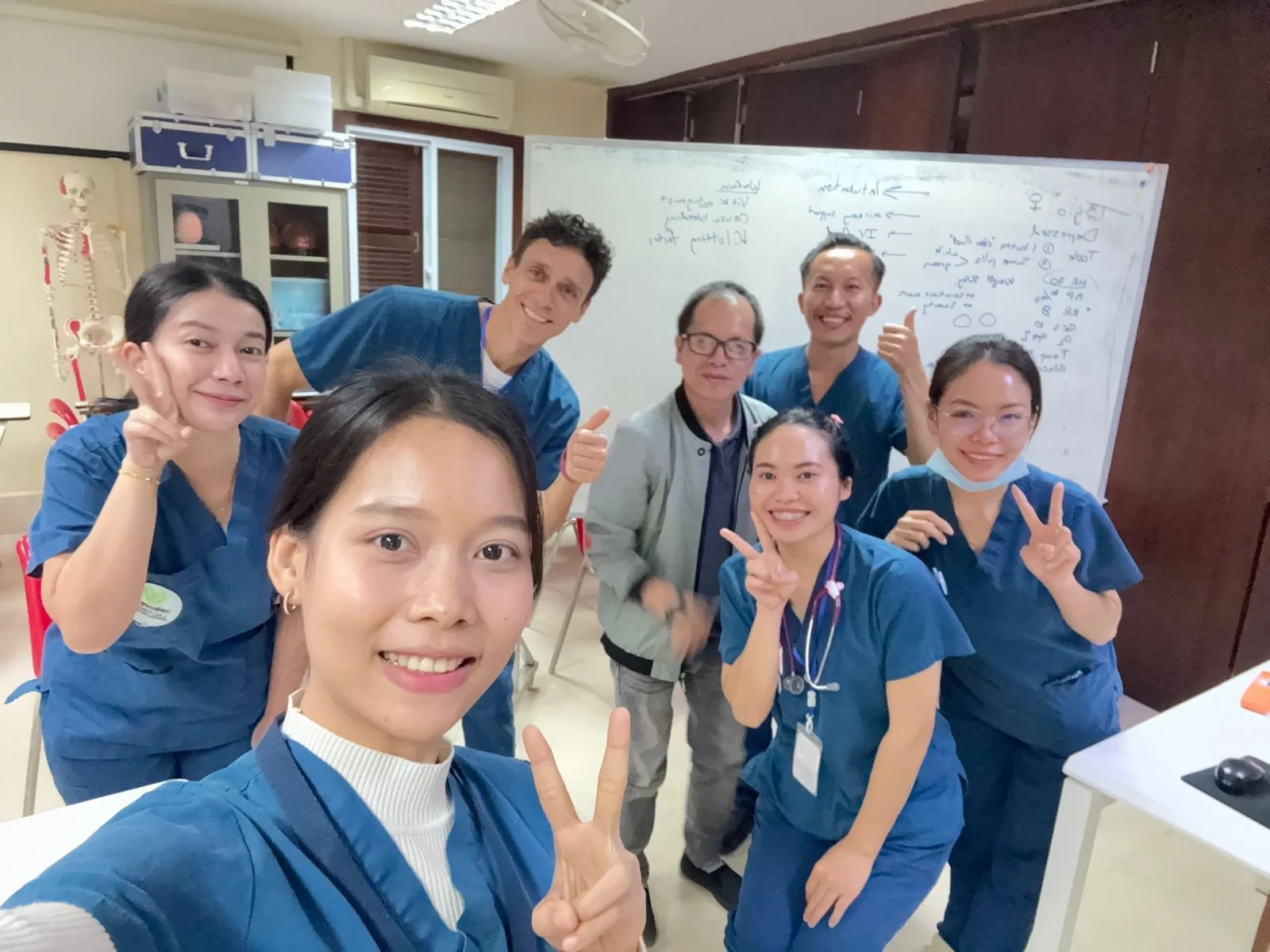
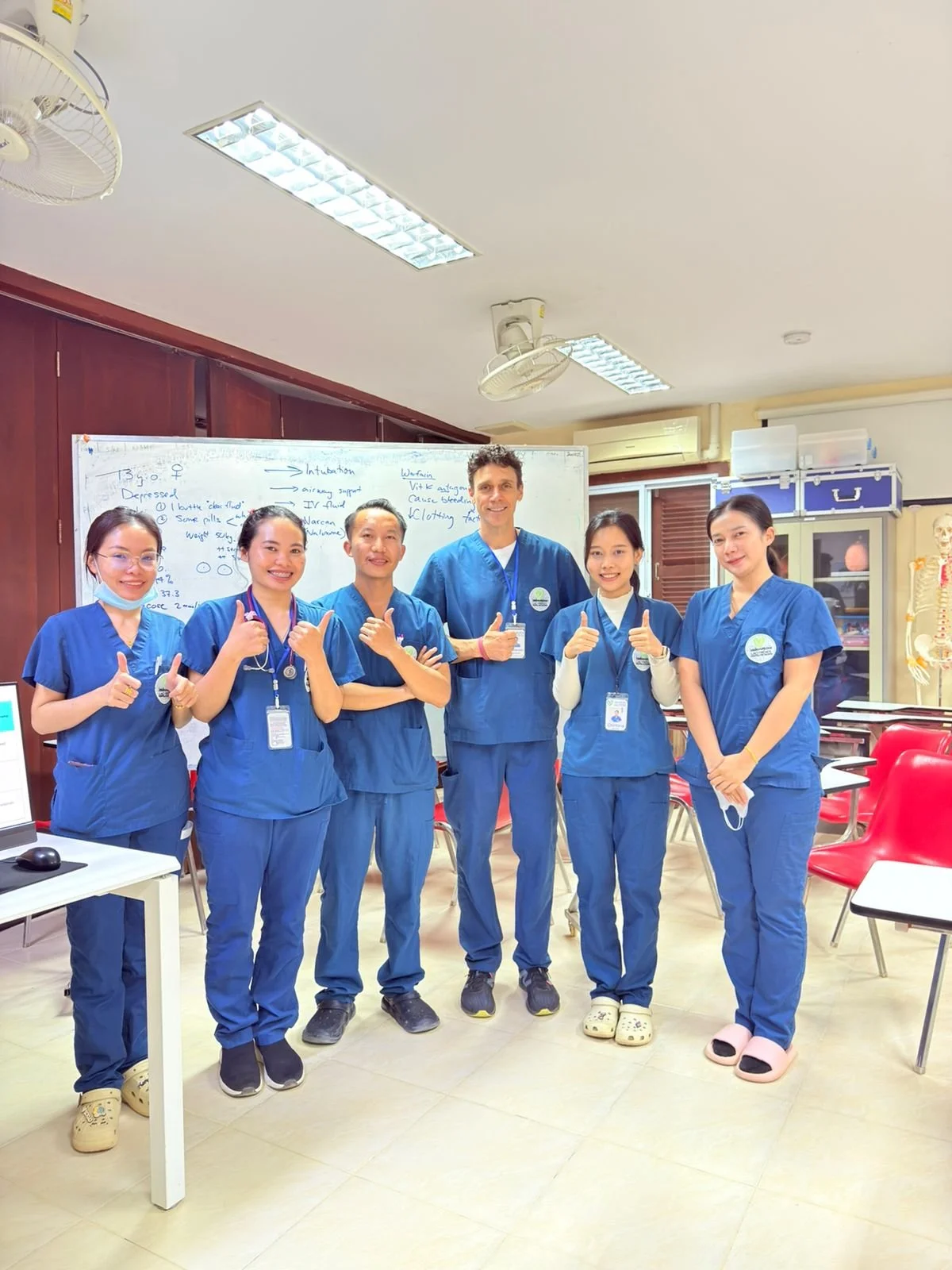
Each day, the Lao staff created an atmosphere that was immediately felt upon entering the hospital. What you walked into each day was community. People were welcoming, collaborative, and kind. There was little of the hierarchy so familiar in many Western hospitals. Nurses could joke with doctors, doctors could ask for help, and everyone learned from one another. Staff from different disciplines ate lunch together. After the loss of a child, someone would place an arm around another. Regardless of your role, you belonged. This was a family, united by a shared purpose—and, true to Lao culture, there was an effort to find joy in the work, even on the hard days.
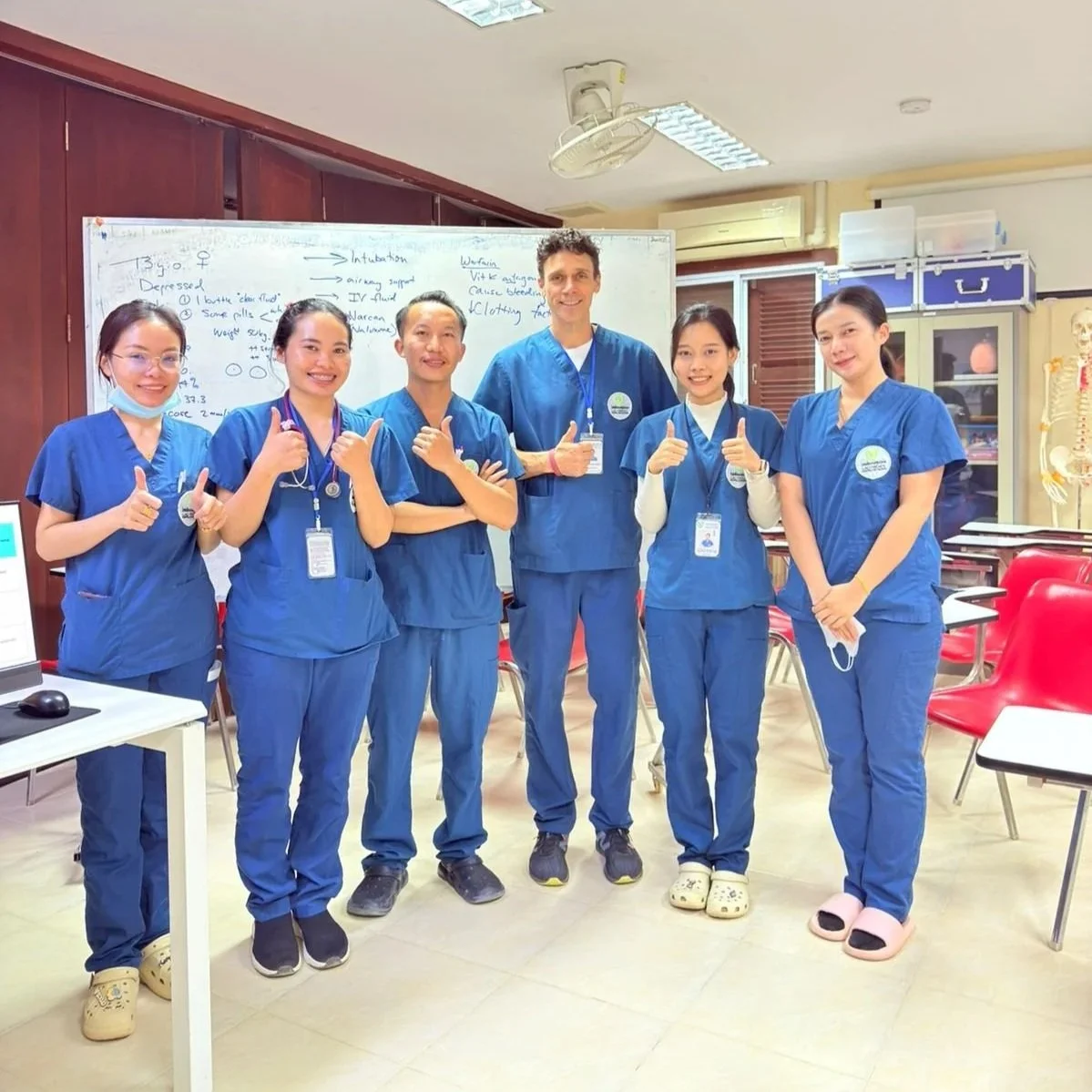
Returning now, nearly ten years later, much has changed.There is a neonatal unit and an intensive care unit. There are dedicated follow-up clinics for thalassemia, nephrotic syndrome, fractures, and epilepsy.
The doctors, nurses, and allied healthcare team continue to manage challenging cases each day, often with limited treatment options, but they do so with skill and compassion. And yet, what has not changed is the feeling you notice the moment you walk through the doors. This is still a community.
There were many new doctors, nurses, and allied staff for me to meet. Different faces, but the same sense of belonging. The same shared meals upstairs.
The same smiles were exchanged in the hallways. The same degree of caring. Seeing this culture persist among a new generation of health care workers signals something special—it means community is being passed down.
The idea that ‘we do this together’ has been woven into the fabric of life at the hospital. Early in my career, a wise preceptor once told me, “it is not so much what we do in medicine, but how we do it”.
This truth has stayed with me. How we care for patients, and how we care for one another, matters deeply—especially in places where resources may be limited and outcomes uncertain. At LFHC, the care is given with heart, with compassion, and with humanity for the children and families. Even on the hard days. And there will be many hard days. But they are faced together here —as a team, as a family